Wool vs Synthetic Carpet: How Cleaning Methods Differ
Not all carpet is the same — and cleaning wool the way you’d clean synthetic can shrink it, brown it or fade it permanently. If you’re booking a clean (or shopping for a cleaner) in Melbourne, knowing your carpet’s fibre type helps you get the best result and avoid damage. Here’s how the main carpet types differ and what each one needs.
How do I know if my carpet is wool or synthetic?
Wool feels softer and warmer underfoot, and older or higher-end Melbourne homes are far more likely to have wool or wool-blend carpet, while newer estates are almost always synthetic. Your original invoice or the builder’s specification will usually say. If there’s an offcut in the wardrobe, the backing often carries a fibre label.
You don’t need to work it out yourself, though — our technicians identify the fibre on arrival, before choosing a method and before anything is applied. That identification is the single most important step in the whole job.
Cleaning wool carpet
Wool is a natural protein fibre — beautiful, durable and naturally stain-resistant, but sensitive to heat, high pH and over-wetting. The rules for cleaning wool safely:
- pH-neutral solutions only — alkaline (high-pH) products used on synthetics can damage wool fibre and cause colour bleed.
- Controlled moisture — wool holds water and can shrink or develop “browning” if over-wet or dried too slowly.
- Moderate heat — the very hot water fine for synthetics can felt and shrink wool.
- Fast, even drying — critical to avoid watermarks and browning.
Done correctly, wool cleans up beautifully and lasts decades. Done with the wrong chemicals or too much water, the damage can be permanent — which is why wool should only be cleaned by someone who treats it as wool, not “just carpet.”
Cleaning synthetic carpet (nylon, polyester, polypropylene)
Most modern Melbourne homes — especially newer estates around Clyde North, Officer and the growth corridors — have synthetic carpet. It’s more forgiving and handles deeper cleaning:
- Nylon — durable and resilient, responds very well to hot water extraction; the easiest to deep-clean and restore.
- Polyester — soft and stain-resistant to water-based spills, but holds oily stains; needs targeted pre-treatment on greasy marks.
- Polypropylene (olefin) — very water- and stain-resistant, but attracts oily soil and can flatten in traffic areas; cleans easily but wears faster.
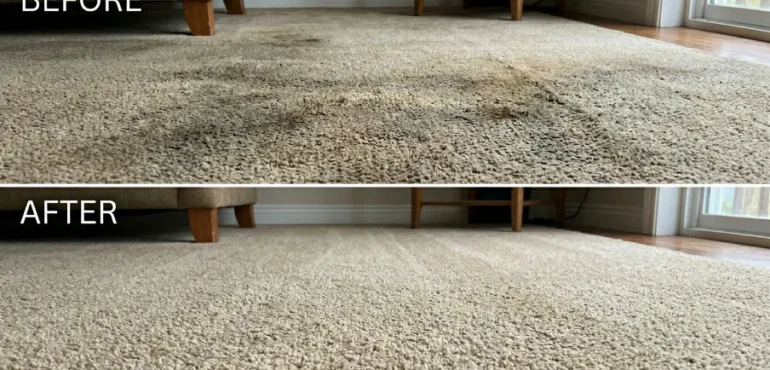
Synthetics tolerate hotter water and stronger extraction, which is why they generally come up looking near-new after a professional clean.
What about Berber and loop-pile carpet?
Berber (looped) carpet — whether wool or synthetic — needs controlled moisture because the loops can wick moisture and dry slowly, risking browning on wool Berber especially. It cleans well but benefits from a cleaner who adjusts method for the loop construction rather than blasting it.
Why the right method matters
The single biggest cause of carpet damage during cleaning is using a one-size-fits-all method — too much heat and moisture on wool, or too little pre-treatment on oily synthetic. At South Clean, we identify the fibre first and match the solution, temperature and moisture level to it. It’s the difference between carpet that looks new for years and carpet that shrinks, browns or re-soils within weeks.
Whatever your carpet is made of, South Clean cleans it correctly. 📞 Call 0422 760 084 or book online — servicing every Melbourne suburb and the Mornington Peninsula. Learn more about our carpet cleaning service and prices.